
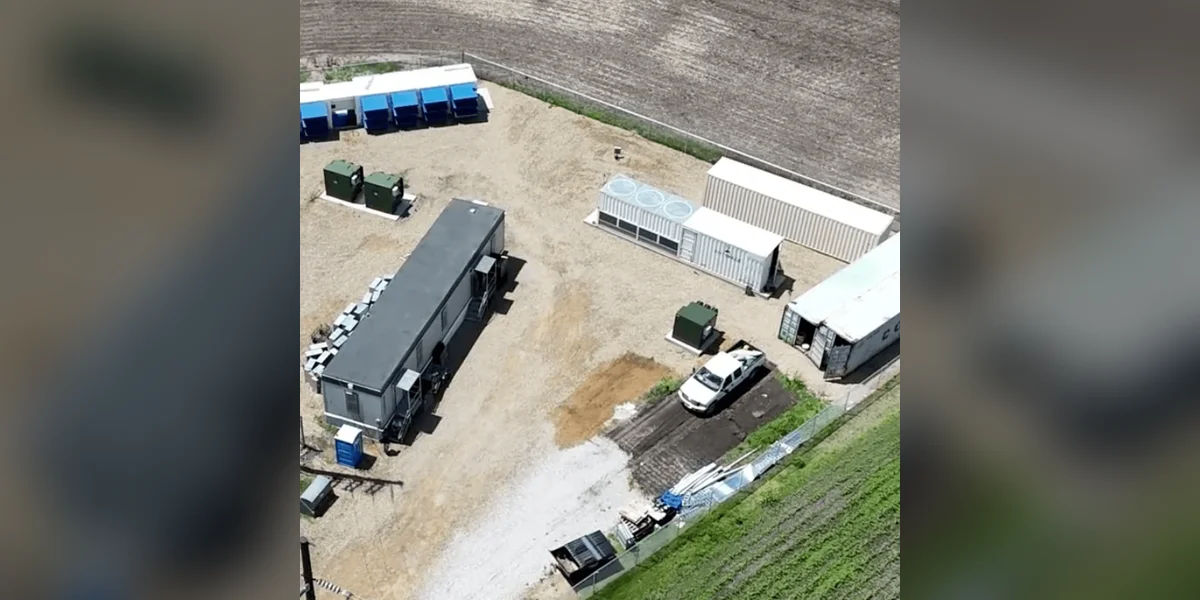
Hydro projects fail most often in the gaps between disciplines: the site is selected before utility timelines are clear, the container arrives before drainage is ready, or the fleet is energized before monitoring and spares are in place.
Technicians and operators need a shared sequence for planning, commissioning, and optimizing a hydro site around uptime and long-term profitability.
Download File
Download the Hydro Site Implementation Checklist
Printable PDF for project managers, vendors, electricians, and commissioning teams.
Key Takeaways
- Treat water, power, network, and permitting as first-order dependencies instead of parallel assumptions.
- Commission the cooling system and monitoring stack before you chase full miner density.
- Use a formal pre-launch audit so the site goes live with operating discipline, not hope.
Five Phases at a Glance
1. Feasibility
Lock water access, power economics, permitting, and network viability before the site becomes construction-committed.
2. Facility Prep
Prepare transformers, switchgear, drainage, coolant sourcing, security, and fiber before equipment lands.
3. Deployment
Set the container, pressure test the loop, install miners in batches, and validate thermals before calling the fleet live.
4. Monitoring
Stand up maintenance routines, spare-part thresholds, and alerting for flow, pressure, temperature, and efficiency.
5. Pre-Launch Audit
Verify loop health, water quality, staff readiness, and dashboards before the site moves into full production mode.
Deployment
Phase 1: Feasibility and Site Assessment
- Confirm access to a stable, high-flow water source and assess seasonal variability or drought risk.
- Identify available power capacity, interconnection lead times, and the economics of that power.
- Review climate, zoning, noise regulations, discharge rules, and environmental compliance requirements.
- Verify internet access and latency to mining pools before the site becomes construction-committed.
Deployment
Phase 2: Infrastructure and Facility Preparation
- Secure property with the right zoning and enough room for container placement, tower access, and future expansion.
- Install transformers, switchgear, PDUs, fiber, routing equipment, and facility security before container arrival.
- Prepare cooling-tower connections and source coolant with the right antifreeze and corrosion-inhibitor profile.
- Use UL/CUL-certified components throughout so the system is easier to insure, inspect, and maintain.
Deployment
Phase 3: Container Setup and Equipment Deployment
- Place the HK3-class container on a leveled pad and connect it to both electrical and cooling infrastructure.
- Prime the loop, fill coolant, pressure test the system, and verify balanced flow across the deployment.
- Install miners in batches, configure dashboard access, and validate inlet/outlet temperature behavior before go-live.
- Run diagnostics on every ASIC before the fleet is declared production ready.
Good commissioning behavior
Bring the site online with enough spare technician capacity to troubleshoot pressure balance, network configuration, and miner exceptions immediately. That time is cheaper during commissioning than after production starts.
Deployment
Phase 4: Maintenance and Monitoring Setup
- Set recurring filter cleaning, coolant testing, quarterly inspections, and replacement-part inventory thresholds before the site reaches steady state.
- Stand up IoT or SCADA-style alerting for flow, pressure, temperature, and miner-level efficiency data.
- Track uptime and J/TH behavior weekly so maintenance is driven by trend data, not anecdotes.
Deployment
Phase 5: Operational Optimization and Pre-Launch Audit
| Final audit item | Expected outcome |
|---|---|
| Cooling loop | Leak and pressure tests pass with stable regulated flow |
| Water quality | Fluid is filtered, treated, and pH balanced |
| Miners and container | Units are powered, cooled, reachable, and diagnostics are complete |
| Staff readiness | Emergency procedures and shutdown logic are understood |
| Monitoring | Dashboards and alerts are active before full production starts |
Once the technical audit is complete, revisit ROI assumptions around BTC price, energy cost, flexible-load contracts, and seasonal operating conditions. That keeps the deployment grounded in the economics it was approved under.