
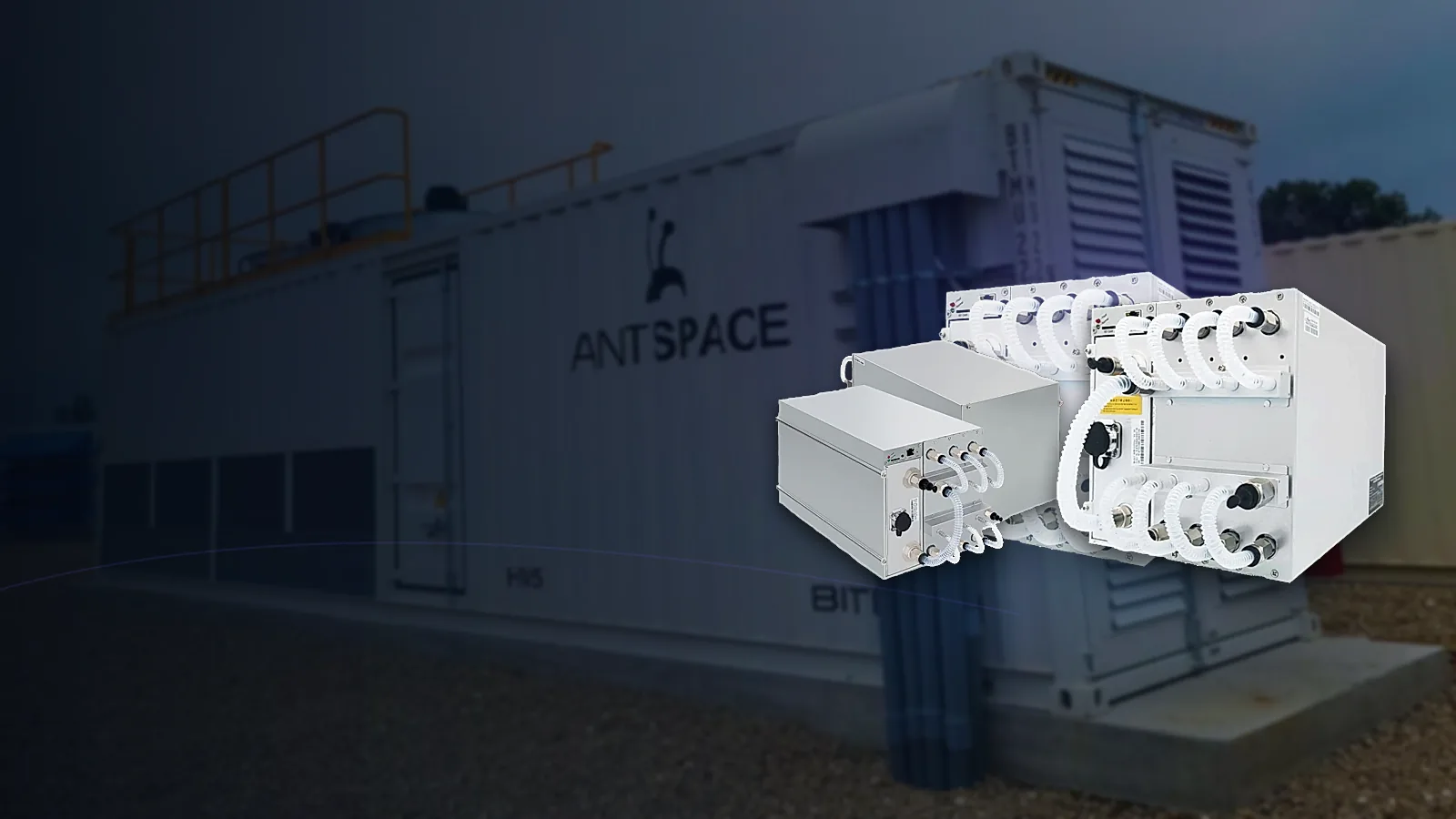
How to Start Bitcoin Mining
How mining pays, what hardware costs, and when hosting beats the garage. We mined through two halvings and wrote down what works.
You need three things to start mining Bitcoin in 2026: an ASIC miner ($1,500–$9,000 depending on the model), electricity cheap enough to leave a margin, and someone to run the machine, either you at home or a hosting facility on industrial power. Work through the steps in order. Each one links real catalog prices and a live profitability calculator so you can check the math yourself.
Step 1: How Mining Pays You
Bitcoin miners earn money by winning blocks. The network mines about 144 blocks per day, and each one pays a 3.125 BTC subsidy (fixed until the next halving in 2028) plus transaction fees. Your share of that payout equals your share of the network’s total computing power, around 860 EH/s as of mid-2026 per the Cambridge Bitcoin Electricity Consumption Index.
You make or lose money on two numbers. Hashrate (terahashes per second) sets how much BTC your machine earns. Efficiency (joules per terahash) sets how much electricity each terahash costs you. Each machine on the network earns the same BTC per terahash, so the miners who win pay the least for power and burn the fewest joules.
Step 2: Choose Home, Hosted, or Managed
Decide who runs the machine before you shop for one. The three paths suit different budgets and different appetites for hands-on work:
| Mine at home | Buy + host at a facility | Managed program | |
|---|---|---|---|
| Upfront | Miner + 240V circuit + cooling | Miner + hosting agreement | From $1,000 (Managed Mining) or $100 (BitVault) |
| Power rate you pay | Residential, ~$0.17/kWh U.S. average | Industrial, near $0.065/kWh | Bundled into the program |
| Noise & heat | Yours to manage (~75 dB for air-cooled) | The facility’s problem | The facility’s problem |
| Repairs & uptime | You | On-site technicians | On-site technicians |
| Best for | Tinkerers, cheap power, heat reuse | Owners who want machine-level control | Investors who want BTC output, not operations |
Most first-time miners who run the math end up in the middle column: own the hardware, let a facility power and maintain it. That is what MiningStore’s Iowa hosting does across 62.5 MW and 11 facilities. If you would rather skip hardware selection, the Managed Mining Program handles procurement through payout.
Not sure the hands-on route is for you at all? We compared every hands-off option — managed programs, hosting, cloud hash rate, and pooled products — in how to mine Bitcoin without managing hardware yourself.
Step 3: Pick Your Hardware
Serious Bitcoin miners run SHA-256 ASICs from a handful of manufacturers: Bitmain (Antminer), MicroBT (WhatsMiner), Bitdeer (SealMiner), and Auradine. Ignore the marketing and compare models on three numbers:
- Price per terahash ($/TH): what you pay for output capacity.
- Efficiency (J/TH): what each terahash costs you in power for the life of the machine. Current flagships run 12–16 J/TH; above ~30 J/TH you need cheap power.
- Cooling type: air-cooled units are simple and loud; hydro and immersion units run denser and quieter but need water infrastructure, which in practice means a facility.
Three in-stock reference points from our shop right now:
| Role | Model | Hashrate | Efficiency | Price | $/TH |
|---|---|---|---|---|---|
| Lowest-cost entry point | Canaan Avalon Q 90 TH/s | 90 TH/s | 18.6 J/TH | $1,704 | $19/TH |
| Most efficient air-cooled | MicroBT WhatsMiner M70S 250 TH/s | 250 TH/s | 13.5 J/TH | $4,020 | $16/TH |
| Most efficient hydro | MicroBT WhatsMiner M73 Hydro 490 TH/s | 490 TH/s | 14.5 J/TH | $6,938 | $14/TH |
New machines carry manufacturer warranties and the latest efficiency; used machines cost less per terahash but give up efficiency and warranty coverage. If you plan to host, buy the most efficient unit you can afford: power is your one recurring bill, so J/TH compounds. The hardware shop shows $/TH and efficiency on each card.
Step 4: Run the Numbers Before You Spend
The profit math is short: BTC earned per day × BTC price − (watts × 24 ÷ 1,000 × your power rate). The power rate dominates that equation. At the U.S. residential average of about $0.17/kWh (EIA data), most modern ASICs lose money after electricity. At industrial hosting rates near $0.065/kWh, the same machines clear a margin and mine BTC below market price.
Our Bitcoin mining calculator loads live network data, pre-fills any miner from the shop, and shows daily profit, breakeven power rate, and hardware payback time. Run your shortlist at both rates. You will see the home-versus-hosted answer in that one comparison.
Step 5: Set Up a Wallet and Join a Pool
Solo mining with a few machines means waiting years for an unlikely block, so miners join pools that aggregate hashrate and pay each member’s share daily (most pools run FPPS-style payouts and charge 1–2%). You also need a Bitcoin wallet you control to receive payouts; for meaningful balances that means a hardware wallet or institutional custody rather than an exchange account. Our partners page lists custody providers we trust, and if you host with MiningStore your payouts go to the wallet address you set.
Step 6: Deploy at Home or Ship to a Host
At home, treat an ASIC like the industrial appliance it is: a dedicated 240V circuit sized for continuous load (a 3,500W miner needs more than a standard 15A/120V outlet delivers), ventilation for 10,000+ BTU of heat, and a plan for 75 dB of fan noise, comparable to a shop vacuum that does not shut off. Garages and outbuildings work; bedrooms do not.
Hosted, deployment is logistics: you buy the machine, it ships to the facility, technicians rack and configure it, and you get dashboard access with per-serial tracking. At MiningStore’s Iowa facilities that includes 24/7 monitoring, daily fleet updates, and on-site repair staff, the people who keep your machine at its rated uptime.
Step 7: Plan for Taxes From Day One
In the U.S., mined BTC is ordinary income at its fair market value the day you receive it (IRS Notice 2014-21), and you owe capital gains on any appreciation when you sell. The upside: mining hardware is depreciable equipment, and bonus depreciation under Section 168(k) can let qualifying buyers deduct a large share of the purchase in year one. Keep per-payout records from your first day, and talk to a crypto-literate CPA. Our guide to mining tax benefits covers the framework in depth.
Mistakes First-Time Miners Make
- Pricing the machine and ignoring the electricity. Hardware is a one-time cost and power is a daily one. A cheap, inefficient miner on expensive power costs more than any flagship.
- Assuming today’s output is permanent. Network difficulty re-targets every two weeks and has trended up through most of Bitcoin’s history. Build margin for it.
- Underestimating home logistics. Breaker capacity, heat, and noise complaints end more home operations than bad math does.
- Buying "too good to be true" hardware from unknown sellers. Gray-market machines arrive used, damaged, or not at all. Buy from a vendor with a return policy and a phone number someone answers.
- Ignoring taxes until April. Each payout is an income event with a timestamp and a price. Rebuilding a year of them in April is miserable.
Beginner Questions
How much money do I need to start Bitcoin mining?
An ASIC of your own runs $1,500–$4,000 for the machine, plus electrical setup at home or a hosting agreement. If you want the output without operating hardware, MiningStore’s Managed Mining Program starts at $1,000 and BitVault at $100. Pick your entry point by how hands-on you want to be.
Can I mine Bitcoin on my PC or phone?
No. Bitcoin mining moved to purpose-built ASIC chips years ago; a modern ASIC computes hashes hundreds of thousands of times faster than a gaming GPU at the same power draw. Phone and browser "mining" apps are marketing gimmicks or scams. Real BTC output comes from an ASIC you own or a stake in machines someone hosts for you.
How long does it take to mine 1 Bitcoin?
A single modern machine (around 600 TH/s) earns about 0.0003 BTC per day at mid-2026 network difficulty, which works out to nine years per full BTC from that one unit. In practice you mine through a pool that pays your fraction daily, and operators scale by adding machines rather than waiting on one.
Is Bitcoin mining legal in the United States?
Yes. Bitcoin mining is legal in the U.S. and most countries. You owe ordinary income tax on mined BTC at its value the day you receive it, and capital gains when you sell. For home setups, the binding local rules are noise ordinances and residential electrical service limits, which is one reason many individual miners host at a facility instead.
Do I need technical skills to mine Bitcoin?
Not if you host. You buy the machine and the facility handles racking, power, monitoring, and repairs; you watch a dashboard and receive BTC. Running machines at home takes hands-on work: a dedicated 240V circuit, heat and noise management, and firmware troubleshooting.
Is it better to mine at home or use a hosting facility?
It comes down to your power rate. U.S. residential electricity averages about $0.17/kWh while industrial hosting runs near $0.065/kWh, and that gap separates losing money from mining BTC below market price. Home mining makes sense with cheap power or when you reuse the heat. Run both scenarios in our mining calculator before you decide.
Sources & References
MiningStore publishes the third-party data sources behind the claims on this page so operators, investors, and researchers can verify every figure against primary reporting.
- How Bitcoin Works — Halving Schedule & Supply Cap — Bitcoin.org
- Cambridge Bitcoin Electricity Consumption Index (CBECI) — Cambridge Centre for Alternative Finance, University of Cambridge
- Electric Power Monthly — Average Price of Electricity to Ultimate Customers — U.S. Energy Information Administration
- Publication 946: How to Depreciate Property (Section 168(k) Bonus Depreciation) — U.S. Internal Revenue Service
- Notice 2014-21: Virtual Currency Guidance (Mining Income) — U.S. Internal Revenue Service
Skip the Guesswork
Tell us your budget and goals. We'll recommend a machine and quote our hosted rate. 20-minute call, no pitch deck.