
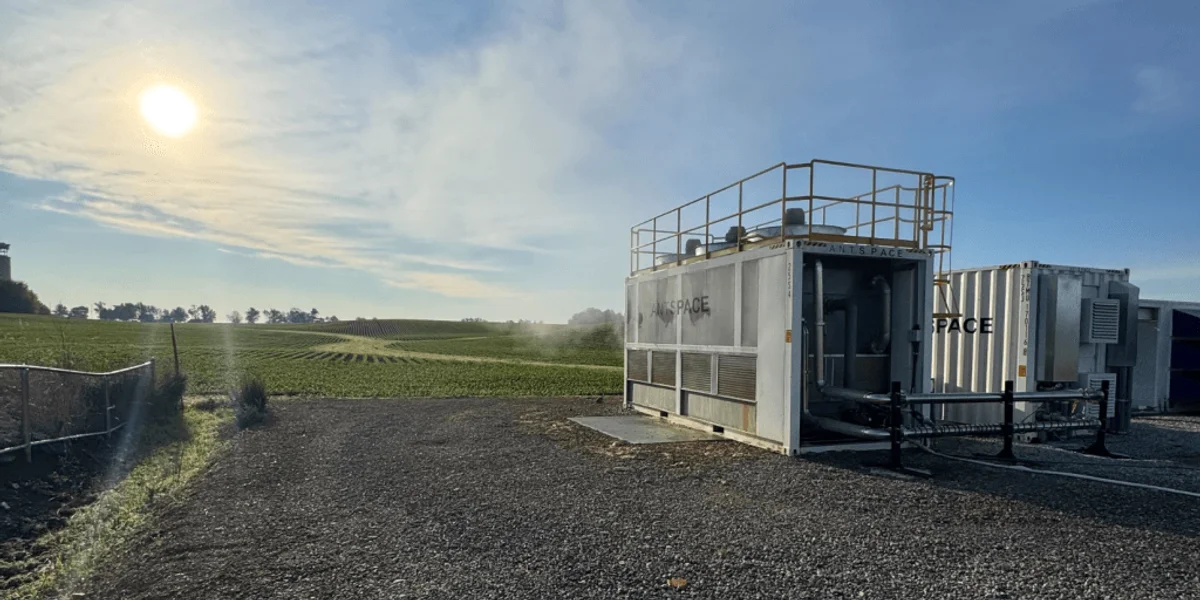
Bitcoin mining is moving toward infrastructure choices that can support hotter, denser, higher-value hardware without wasting operational effort on thermal workarounds.
Hydro-cooled hosting stands out because it improves thermals, site flexibility, and long-term scaling in the same move.
Key Takeaways
- Hydro removes heat more efficiently than air and supports higher-performance fleets.
- The quieter, denser operating profile changes what kinds of sites are viable.
- Hydro is no longer an experiment; it is increasingly the strategic hosting model for serious operators.
Related Insight
What Hydro-Cooling Changes
Hydro uses water or water-glycol mixtures to extract heat directly from ASICs through cold plates or integrated flow paths. That creates more consistent thermal behavior than fan-heavy air-cooled designs.
- Better heat removal under sustained load.
- Less dependence on ambient air conditions.
- A quieter operating envelope that opens up more site options.
Related Insight
Why Hosting Operations Benefit Most
- Higher density allows more machines per square foot or per container footprint.
- Hydro performs more reliably in hot climates where air systems would otherwise struggle.
- The infrastructure can align well with waste-heat recovery or renewable-power narratives when that matters to the investor base.
Related Insight
Air vs. Hydro at a Glance
| Category | Air cooling | Hydro cooling |
|---|---|---|
| Cooling efficiency | Moderate | Extremely high |
| Power overhead | Higher fan and HVAC load | More targeted thermal management |
| Density | More limited | Higher-density deployment |
| Noise | Loud | Near-silent relative profile |
| Climate resilience | Best in cooler regions | More resilient in hotter zones |
| Long-term ROI | Moderate | Stronger where utilization stays high |
Related Insight
Why the Shift Is Happening Now
- Bitmain and MicroBT already offer flagship hydro-ready models, and Auradine shows hydro is expanding into rack-native compute environments too.
- Institutional operators are prioritizing consistency, transparency, and lifecycle returns over short-term novelty.
- The next generation of compute density makes older thermal assumptions harder to defend economically.
Infrastructure takeaway
Hydro gives operators a stronger hosting architecture when they plan around the next hardware cycle instead of the last one.