
If you are looking at Bitcoin mining in 2026, you are probably not chasing a quick win. You are asking harder questions: Does mining belong in my portfolio? How does it compare to simply buying and holding BTC? Can it deliver durable, after tax returns over several years? Those are the right questions for an investor.
The honest answer is that Bitcoin mining can be a long term, infrastructure style position that earns in sats and potential tax advantages. Your outcome is not random. How much you make depends on three levers you control:
When those three line up, mining stops feeling like a speculative trade and starts behaving like a planned, resilient part of your overall strategy.
Before thinking in dollar amounts per day, it helps to understand what actually drives your results.
Four forces shape your outcome:
You do not control the Bitcoin price or global network difficulty. You do control:
The rest of this guide walks through those three decisions, so you can see how investors are approaching mining in 2026.
Hardware selection is where many investors either protect their downside or lock in years of frustration.
In 2026, the gap between efficient, modern ASICs and older models shows up clearly in your power bill and your margin. Efficient machines give you:
Below are four flagship models many investors use as the foundation of a 2026 focused fleet. For each one, you can check the live mining profitability calculator at Braiins to see up to date projections based on industry average power rate and hosting structure.
The Antminer S21 is a core choice for modern air cooled deployments. It combines strong efficiency with wide availability and a proven track record in the field.
The S21 often makes sense if you:
The S21’s role is usually to provide a stable base of hash rate that can ride through multiple market cycles without constant intervention.
Check the profitability calculator here.
The WhatsMiner M60S++ is designed for investors who want premium air cooled efficiency and industrial build quality.
This model often fits investors who:
When you run the M60S++ through a calculator, you are looking at how its efficiency improves your breakeven power price and how much extra cushion it gives if network conditions tighten. It is often used as the backbone of serious air cooled fleets.
Check the profitability calculator here.
The Antminer S21 Hydro is built for high density, hydro cooled infrastructure. It is aimed at investors who want to push both efficiency and capacity further than typical air cooled racks allow.
It can be a strong fit if you:
In a calculator, S21 Hydro deployments usually assume managed hosting in a professional facility. The attraction is a combination of high efficiency, strong thermal performance, and the ability to scale into larger, more concentrated positions.
Check the profitability calculator here.
The WhatsMiner M63S Hydro sits in the same high conviction category for investors who want to anchor a long term mining strategy in premium hydro cooled infrastructure.
This model often makes sense if you:
Modeling the M63S Hydro in a calculator helps you see how this class of machine behaves when you adjust power rates, Bitcoin price assumptions, and difficulty trends. For many investors, this is the hardware that turns mining from an experiment into a serious, long horizon position.
Check the profitability calculator here.
Even the best machines cannot rescue a poor hosting decision. Your hosting partner determines your real power cost, uptime, maintenance quality, risk exposure, and how much of your time gets consumed by operational noise.
The right hosting partner is the one whose structure matches your goals, risk tolerance, and desired level of involvement.
When you speak with potential partners, focus on the elements that will still matter in a year, not just the headline rate.
Look for:
For many investors, MiningStore is the partner that makes these choices simpler.
MiningStore focuses on:
Choosing the right partner is about more than finding space for your machines. It is about putting your capital into an operating environment that supports the returns you are aiming for.
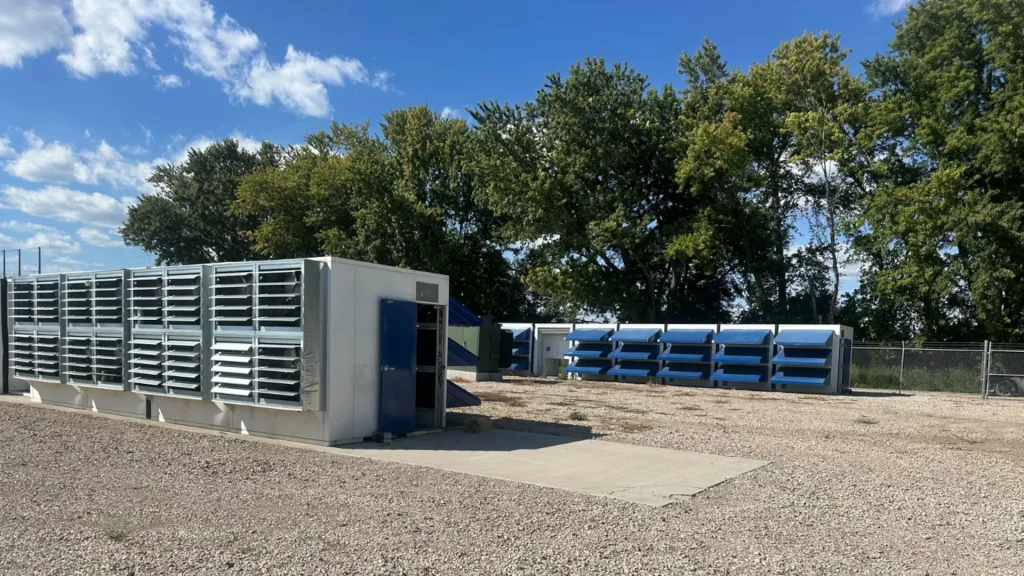
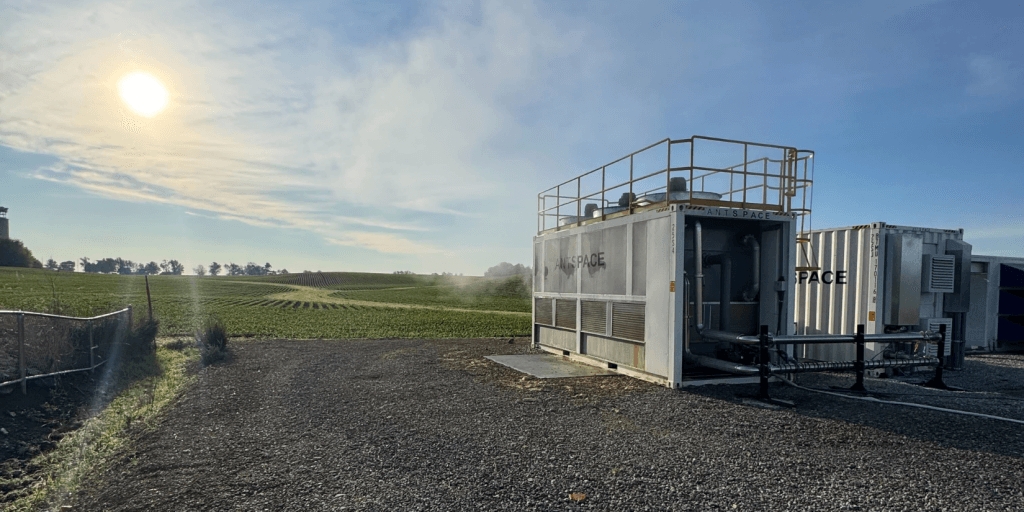
Want to see what this looks like in the real world? Explore MiningStore’s purpose built Bitcoin mining facilities and see how efficient hardware, competitive power, and professional operations come together at scale.
The final piece is timing. Many people lose money not because mining is broken, but because they enter at the wrong point in the cycle and for the wrong reasons.
Bitcoin moves in cycles. Hardware pricing, hashprice, and investor sentiment all follow.
A few principles help keep your timing grounded:
If you are already comfortable owning Bitcoin, it is natural to ask:
“Why would I mine Bitcoin instead of just buying it and holding it?”
In many portfolios, the answer is not “either or.” Mining and spot Bitcoin often sit next to each other and play different roles.
Buying Bitcoin gives you:
Mining Bitcoin, when structured correctly, can add:
For many investors, the real question is not “Should I mine or buy BTC?” but “What mix of spot Bitcoin and mining exposure makes sense for my mandate, time horizon, and tax situation?”
Mining is not a shortcut. It is a way to add an actively managed, infrastructure style position on top of your core Bitcoin allocation, if you are willing to approach it with discipline.
So how much money can you make mining Bitcoin in 2026?
For an investor, the more useful question is: Can mining deliver risk adjusted, after tax returns that justify the capital and complexity compared to my alternatives?
A thoughtful 2026 plan usually follows a simple sequence.
Before choosing a single machine, decide what you want mining to do:
This step aligns expectations internally, whether you are investing personally, through a family office, or as part of a broader strategy.
Once the role of Bitcoin mining in your portfolio is clear, you design the fleet.
For many 2026 strategies, that means building around a focused set of efficient models such as:
You size the fleet to your capital, your comfort with concentration, and your preferred time horizon, then use a live calculator to model outcomes across different price and difficulty scenarios.
Next, you decide where those assets will live.
For high net worth, private equity, and family office investors, the hosting conversation is less about rack space and more about:
This is where MiningStore often enters the picture. MiningStore works with investors who want:
The goal is to turn hosting into a reliable operating platform, not an ongoing operational headache.
With hardware and hosting framed out, you build an underwriting case:
At this stage, the question becomes: Does this look like an acceptable investment given my return targets and constraints, or does it need to be resized or restructured?
Finally, you commit to a time horizon that fits the asset.
Bitcoin mining behaves very differently when you expect to own and operate across multiple phases of the Bitcoin cycle, rather than react to every short term move.
That does not mean ignoring risk. It means setting clear rules for when you add, hold, or scale down, and reviewing the thesis with the same discipline you apply to other real world assets.
When you approach mining this way, “How much money can you make mining Bitcoin in 2026?” stops being a speculative question and becomes part of a structured investment process.
You are no longer hoping that mining will work. You are making deliberate choices about equipment, hosting, timing, and structure, and partnering with an operator like MiningStore that can help you execute that plan with clarity.
If you want to see what this could look like for your situation, the next logical step is a simple conversation: define your budget, your power assumptions, and your time horizon, then build a tailored mining plan you can underwrite with confidence.
If you’ve made it this far, you’re already thinking about Bitcoin mining differently than most. You’re not asking for a magic daily dollar figure, you’re asking how mining can function as a disciplined, infrastructure-style position inside your broader portfolio.
That’s exactly how we approach it at MiningStore.
On a short discovery call, we can walk through:
If you want a clear, numbers-driven view of what Bitcoin mining could look like for you next year, the next step is simple:
How much you make with a fleet of modern machines (for example, 5–10 ASICs hosted professionally) in 2026 depends on four main inputs: your power price, the efficiency of the ASICs you choose, your hosting fees, and how many hours per month those machines run. An efficient fleet built around models like the Antminer S21, WhatsMiner M60S++, Antminer S21 Hydro, or WhatsMiner M63S Hydro at a competitive power rate can generate a positive return over time, but you should always run the numbers in a live profitability calculator using your exact power cost and fee structure.
Mining can be profitable after the 2024 halving, but it is no longer forgiving of poor decisions. Profitability in 2026 comes from efficient hardware, a suitable hosting partner with competitive power and solid uptime, and deploying capital at a sensible point in the Bitcoin cycle. If any of those three are weak, your margin disappears quickly.
The minimum investment depends on the hosting provider and the hardware you choose. Some investors start with a small fleet of a few modern ASICs, while others commit several megawatts from day one. A practical starting point is to define your total budget, then work backward into the number and type of machines, plus hosting, that you can support for several years without stretching your liquidity.
Buying and holding Bitcoin gives you simple exposure and full price upside, while mining adds an operating asset that can earn in sats over time and may bring additional tax advantages depending on your structure. Many investors choose to do both. They hold spot Bitcoin and allocate a portion of capital to mining as an infrastructure style position with different risk and return drivers.
Most investors think in multi year time frames, not months. Your payback period depends on hardware cost, power price, hosting fees, Bitcoin price, and network difficulty. A disciplined approach is to model conservative, base, and optimistic scenarios in a profitability calculator, then decide whether the expected range of outcomes fits your return targets and risk tolerance.
MiningStore helps investors by combining efficient hardware, infrastructure first hosting in competitive power markets, and deep energy market expertise. That means your equipment is deployed in facilities designed for mining, your power strategy is grounded in real grid conditions, and you have clear reporting to track performance. The goal is to turn mining into a structured, underwritable part of your portfolio rather than a speculative side project.
Disclaimer: This article is for informational purposes only and does not constitute tax, legal, or investment advice. Every investor’s situation is unique. Consult a qualified tax advisor, CPA, or legal professional before making tax-related decisions. Bitcoin mining involves financial, operational, and regulatory risks, and MiningStore makes no guarantees regarding specific outcomes.