
Bitcoin Mining Tax Strategy 2026: Strategic Structuring for After-Tax ROI
How U.S. investors can structure Bitcoin mining for compliant, tax-efficient returns in 2026.
In 2026, U.S. Bitcoin mining is a tax-sensitive, documentation-driven business that either compounds after-tax returns or quietly erodes them. This guide walks you through what actually moves the needle: how mining income and gains are treated, why entity structure and cost recovery rules matter so much, how clean records and location strategy (including low-cost, renewables-heavy Iowa) can strengthen your position, and where an operator like MiningStore fits into a compliant, infrastructure-style mining allocation. The goal isn’t to replace your tax advisor, but to give you a clear framework for asking better questions and structuring Bitcoin mining as a serious, after-tax contributor to your portfolio.
2026: A New Blueprint for Mining Profitability
For investors, Bitcoin mining in 2026 is no longer a speculative side project. It has become a capital-intensive, regulated business that sits at the intersection of:
- A maturing IRS framework for digital assets
- Tightening reporting requirements for brokers and intermediaries
- Attractive depreciation and expensing rules for qualifying business assets
This article walks U.S.-based investors through what matters most heading into 2026, and how structuring, recordkeeping, and the right operational partner can turn compliance from a constraint into profits.
Tax Treatment and Structuring: The Two Levers That Matter
To build a profitable mining allocation in 2026, investors need to understand two things clearly:
- How mining income and gains are taxed, and
- How business structuring changes the after-tax result.
How Mining Income and Gains Are Taxed
For U.S. taxpayers, Bitcoin received from mining is treated as ordinary income at its fair market value on the day it is earned. The IRS has long held that digital assets received as payment for goods or services must be included in gross income at fair market value when received, a position originally set out in Notice 2014-21 and reaffirmed in updated digital asset guidance. (IRS)
Specialized tax commentary confirms that mining rewards fall under this principle: the value of the Bitcoin at the time it is mined is taxable as ordinary income. (Federal Lawyer)
Later, when mined Bitcoin is sold or used, a capital gains calculation applies to the difference between:
- Its fair market value when mined (your basis), and
- Its fair market value at the time of disposal.
If the coins are held more than 12 months, the gain is generally taxed at long-term capital gains rates, which at the federal level remain 0%, 15%, or 20%, depending on income and filing status. (IRS)
So every mined coin has a two-step tax profile:
- Step 1: Ordinary income when it is mined.
- Step 2: Capital gain (ideally long-term) when it is sold.
For Bitcoin miners, that split becomes a set of timing levers around when to realize income and when to realize gains.
Where Structure Changes the Outcome
The same tax rules apply to everyone, but the outcome is very different for a hobbyist versus a properly structured business.
- A hobby miner reports the ordinary income but generally cannot deduct related expenses like power or hardware. Every dollar of revenue is fully taxable.
- A mining business (LLC, S-Corp, or C-Corp) may deduct ordinary and necessary expenses such as electricity, hosting, monitoring software, repairs, and depreciation on hardware and supporting infrastructure, reducing taxable income. (Gordon Law Group)
Two investors can run the same hashrate and see very different after-tax returns purely because one has:
- A formal entity,
- Proper books and records, and
- Evidence that the activity is a trade or business rather than a hobby.
Accelerated Cost Recovery: Bonus Depreciation and Section 179
Structuring as a business also unlocks accelerated cost recovery on capital expenditures, which matters in a hardware-driven industry:
- Bonus depreciation can allow a business to expense 100% of the cost of certain qualifying equipment in the year it is placed in service, rather than over its useful life.
- Section 179 expensing permits many businesses to deduct a large amount of qualifying property each year (subject to caps and phase-outs), which is particularly relevant for mid-sized fleets upgrading infrastructure. (IRS)
For an investor deploying several hundred thousand dollars or more into newer-generation miners and supporting electrical infrastructure, these provisions can materially affect year-one cash flow and tax liability, provided:
- The entity is correctly set up,
- Assets are documented as placed in service in the relevant tax year, and
- Records can support the deduction.
In 2026, with more scrutiny and more reporting, the combination of correct tax treatment plus deliberate structuring becomes one of the key levers for turning mining into a repeatable, after-tax contributor to portfolio returns. (IRS)
Simple Recordkeeping, Stronger Tax Positioning
Many investors hesitate to scale mining because they assume the accounting will be messy: volatile power bills, complex hosting invoices, and lots of small transactions to reconcile.
MiningStore’s profit-sharing Managed Mining Program (MMP) is designed to simplify that reality into something an institutional back office can actually work with.
Instead of dozens of invoices and ad-hoc spreadsheets:
- You receive 12 monthly statements per year, one clear report per month, aligned with the tighter digital asset reporting environment in 2026.
- All on-chain Bitcoin profits are paid directly to your designated mining address once a month, creating a clean, time-stamped income trail.
- You are not juggling a separate stack of dollar-denominated power bills; your economics are captured in a single BTC payout and a single statement, rather than a patchwork of variable expenses.
This simplicity matters because regulations are designed to give the IRS a more complete picture of digital asset activity. (IRS)
For Bitcoin miners, clean, reconciled records are not optional. Fewer moving parts and consistent monthly documentation make it easier for your advisors to:
- Identify and support deductions
- Align mining income with broader capital gains and rebalancing strategies
- Reduce mismatch risk between your records and third-party reporting
In other words: structure plus simple recordkeeping equals a stronger position in a stricter reporting regime.
Why Iowa Matters: State-Level Advantages and Operational Resilience
Federal tax rules apply everywhere, but location still drives economics in energy-intensive infrastructure.
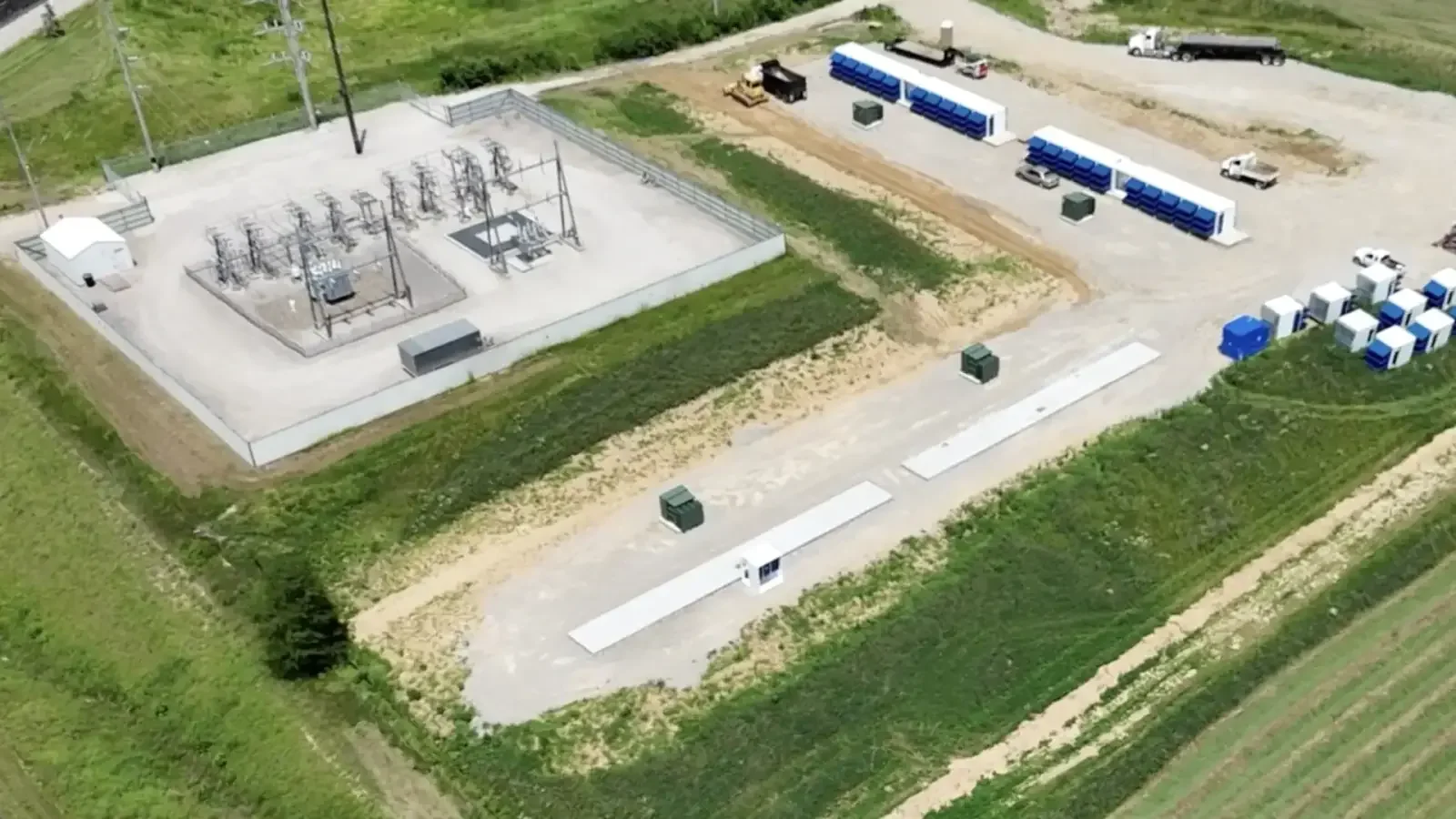
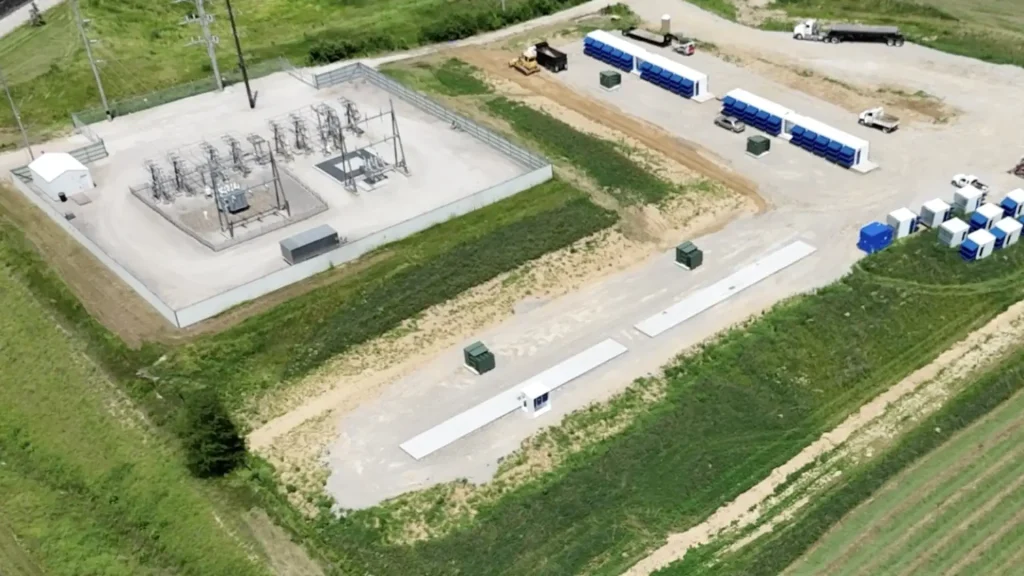
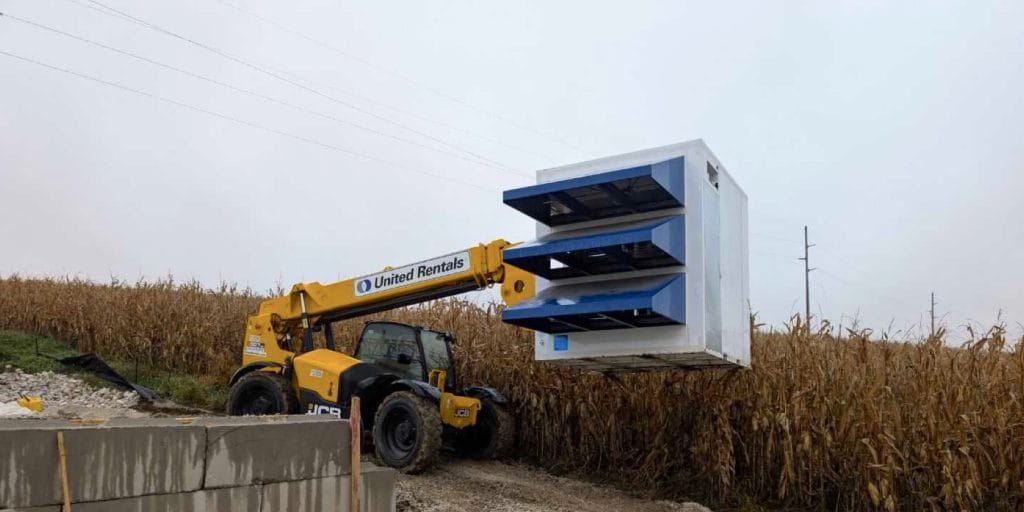
Iowa, where MiningStore operates its eleven facilities, stands out on three fronts.
Low-Cost, Stable Power
According to the U.S. Energy Information Administration (EIA), Iowa ranks among the states with some of the lowest average electricity prices in the country, with industrial rates below the U.S. average. (U.S. Energy Information Administration)
Recent coverage has noted that while the national average retail electricity price increased year-over-year, Iowa’s average rate actually declined, helped by its strong wind generation base and relative insulation from volatile fossil fuel markets. (Axios)
For miners, that translates directly into better gross margins and more resilience across BTC price cycles.
Renewable-Heavy Grid
EIA’s state profile shows that wind turbines generated about 63% of Iowa’s electricity in 2024, the highest wind share of any U.S. state. (U.S. Energy Information Administration)
For institutional investors navigating ESG policies and reputational risk, tying a mining allocation to a predominantly renewable grid isn’t an optional detail, it can be central to investment committee approval.
Combined, these factors give Iowa a compelling mix of cost efficiency and renewable alignment.
exactly the mix long-term capital typically seeks in infrastructure-style allocations.
Capital Management and Exit Planning
Structuring mining correctly is only part of the story. When and how you realize value from mining also drives outcomes.
Timing Bitcoin Disposals
Because mining rewards are ordinary income when they are earned, the decision of when to sell mined BTC becomes a separate planning question.
Long-term capital gains tax treatment applies when assets are held more than one year, at favorable federal rates of 0%, 15%, or 20%, depending on taxable income. (IRS)
That opens up options such as:
- Realizing gains in lower-income years
- Using realized gains to offset capital losses elsewhere in the portfolio
- Coordinating large disposals with broader rebalancing or liquidity events
Mining becomes not just a way to earn BTC, but a way to stage tax-aware exits over time.
Planning Hardware Lifecycle
Mining hardware is a productive asset, but also a depreciating one.
Bitcoin miners continuously evaluate:
- When to retire, repurpose, or sell older, less-efficient machines
- How to coordinate new hardware purchases with available bonus depreciation or Section 179 expensing opportunities
- How to avoid stranded, obsolete capital that still incurs power and maintenance costs but contributes little hashrate
By linking fleet refresh decisions to available depreciation and expensing rules, investors can improve both energy efficiency and after-tax capital recovery at the same time.
The result: a mining allocation that behaves more like a managed infrastructure sleeve than a static pile of hardware.
Preparing for 2026: A Practical Roadmap
With digital asset reporting tightening, the coming year is as much about readiness as it is about deployment. (IRS)
Between now and then, investors should:
- Audit transaction and cost-basis systems, ensuring all mining, transfers, and disposals can be tied back to wallets and intermediaries. (IRS)
- Confirm or adjust entity structure with tax counsel (LLC, S-Corp, C-Corp) so that it reflects how mining and related activities are actually operated.
- Lock in operational partners whose reporting, uptime, and data access meet institutional expectations, so compliance is supported by design, not reconstructed at year-end.
Maximizing After-Tax Returns with Bitcoin Mining
This current tax regime is a rare opportunity that tilts the playing field toward proactive investors. For Bitcoin mining, it creates a perfect alignment of infrastructure, yield, and tax efficiency.
Download the Investor’s Guide: Bitcoin Mining Tax Strategy to understand how these deductions can reshape your after-tax returns.
MiningStore’s U.S. Operational Advantage
As more capital from funds, family offices, and corporates enters mining, the differentiator is no longer who has access to machines, it is who can run them at scale, onshore, and in a way that holds up under regulatory scrutiny.
MiningStore’s U.S. footprint is built around that reality:
- 11 Facilities in Iowa, positioned on renewable-heavy, low-cost grids, backed by EIA data showing Iowa’s wind share and below-average electricity prices. (U.S. Energy Information Administration)
- Institutional-grade reporting and dashboards that give investors clear visibility into hashrate, uptime, and output.
- Simple profit-sharing economics that produce 12 discrete BTC inflows and 12 matching statements per year, instead of a tangle of invoices and OPEX spreadsheets.
- Operational practices aligned with IRS expectations around documentation, placed-in-service tracking, and business activity.
For investors who are serious about making Bitcoin mining part of their 2026 allocation, the decision is not just whether to mine, but which operator they trust to run and document that exposure.
Ready to see what this looks like in the real world? Explore MiningStore’s purpose-built Bitcoin mining facilities and see how we deploy efficient hardware, secure power, and professional operations at scale.
Conclusion: 2026 Is the Time to Structure Smart
Bitcoin mining in 2026 is no longer an unstructured bet on hardware and luck. It is a tax-sensitive, documentation-dependent infrastructure allocation that rewards investors who think like owners of a business, not hobbyists.
By:
- Understanding how income and capital gains are treated,
- Using entity structure and cost recovery rules thoughtfully,
- Choosing locations with favorable power economics, and
- Partnering with operators who can support institutional recordkeeping,
Investors can position mining as a credible, after-tax contributor to their broader portfolio.
MiningStore’s role is straightforward: provide the infrastructure, transparency, and operational simplicity that lets you focus on capital allocation and strategy, not on chasing invoices or rebuilding records.
If you are evaluating how Bitcoin mining could fit into your 2026 allocation:
Book a private consultation with MiningStore to explore how a structured Bitcoin mining strategy could support your portfolio’s long-term objectives. The conversation is about strategy, infrastructure, and fit; your tax advisor determines the final treatment.
Disclaimer: This article is for informational purposes only and does not constitute tax, legal, or investment advice. Every investor’s situation is unique. Consult a qualified tax advisor, CPA, or legal professional before making tax-related decisions. Bitcoin mining involves financial, operational, and regulatory risks, and MiningStore makes no guarantees regarding specific outcomes.
Explore Our Services
Ready to Start Mining?
Talk to our team about managed mining, hosting, or hardware procurement.